

Inflatable Advertising vs Traditional Advertising: Which Works Better at Events?
Visit any trade show or outside event and you'll see the same battle playing out: brands fighting for the same two seconds of someone's attention. Banners, roller stands, printed graphics. They all show up. Most of them look almost identical. Then there's the 15-foot inflatable gorilla in the corner, and nobody's walking past that without stopping.
That's not an accident. It's physics, psychology, and a bit of showmanship working together. But this page isn't here to convince you inflatables are always the answer. They're not. What it will do is give you a straight comparison: what traditional event advertising does well, what inflatable advertising does differently, and where each one earns its place in a campaign.
What "Traditional" Event Advertising Actually Covers
When marketers talk about traditional event advertising, they're usually referring to a fairly well-established toolkit:
Pop-up banners and roller stands: portable, affordable, widely used at exhibitions and conferences
Printed fabric backdrops: for stage settings, photo walls, and trade stand rear walls
Foam boards and rigid display panels: signage, directional graphics, product information
Branded tablecloths, flags, and feather banners: low-cost presence markers
Billboard and out-of-home (OOH) advertising: static roadside or venue placements
Each of these has genuine strengths. They're predictable to produce, straightforward to transport, and most event venues know exactly how to accommodate them. For brands with modest budgets or straightforward messaging needs, they do the job reliably.
The problem isn't that they don't work. It's that they all work the same way, and in a crowded event environment, sameness is a kind of invisibility.
How Inflatable Advertising Works Differently at Events
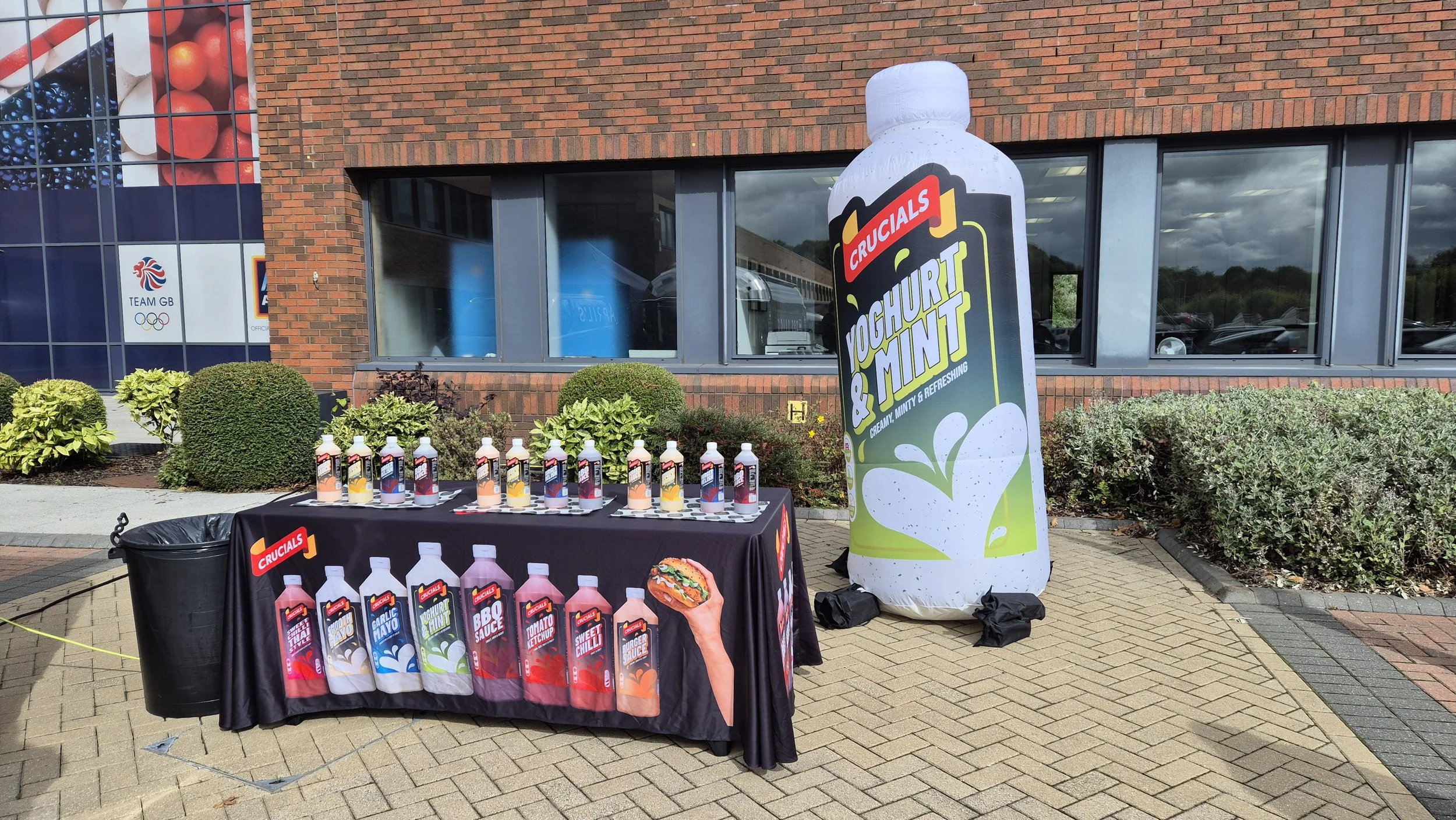
Inflatable advertising operates on a different set of principles. Rather than presenting flat, two-dimensional information, a quality advertising inflatable creates a physical presence: something that exists in three dimensions, often moves, and occupies space in a way that demands to be noticed.
There are a few specific reasons this matters at events.
Height and vertical visibility. A roller banner is typically 2 metres tall at most. A branded inflatable arch or inflatable column can rise to 6 metres or more. At a festival or large outdoor event, that height differential is the difference between being visible at 5 metres and being visible at 50.
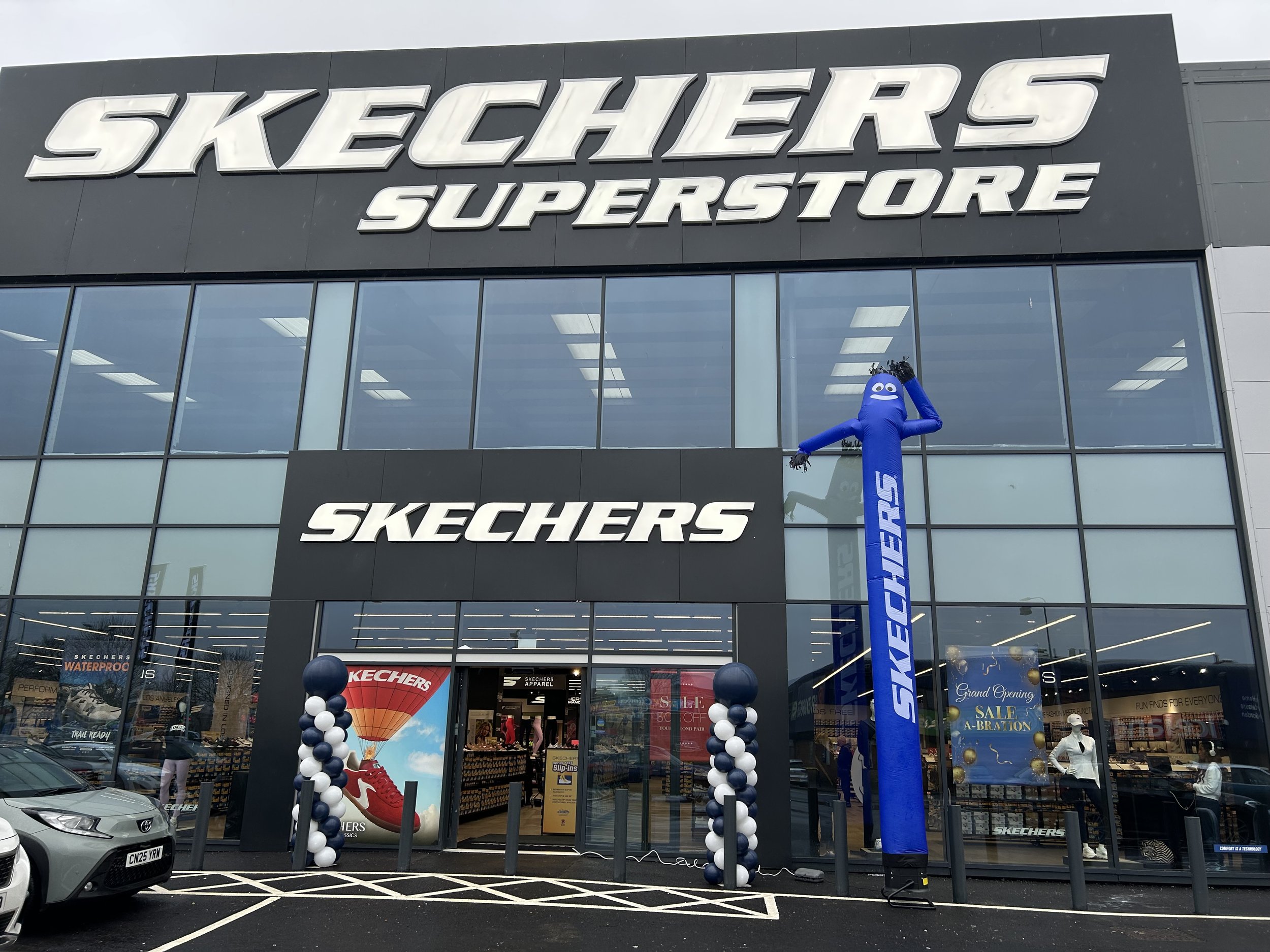
Movement. Static displays compete with other static displays. Air dancers and inflatable structures with movement catch the eye at peripheral vision range, before someone has even consciously decided to look. That's a meaningfully different kind of attention capture.
Dwell time. People glance at banners. They stop at inflatables. There's a measurable difference between a passerby registering your logo and a passerby taking out their phone to photograph something unusual. Brand memory is formed in that second moment, not the first.
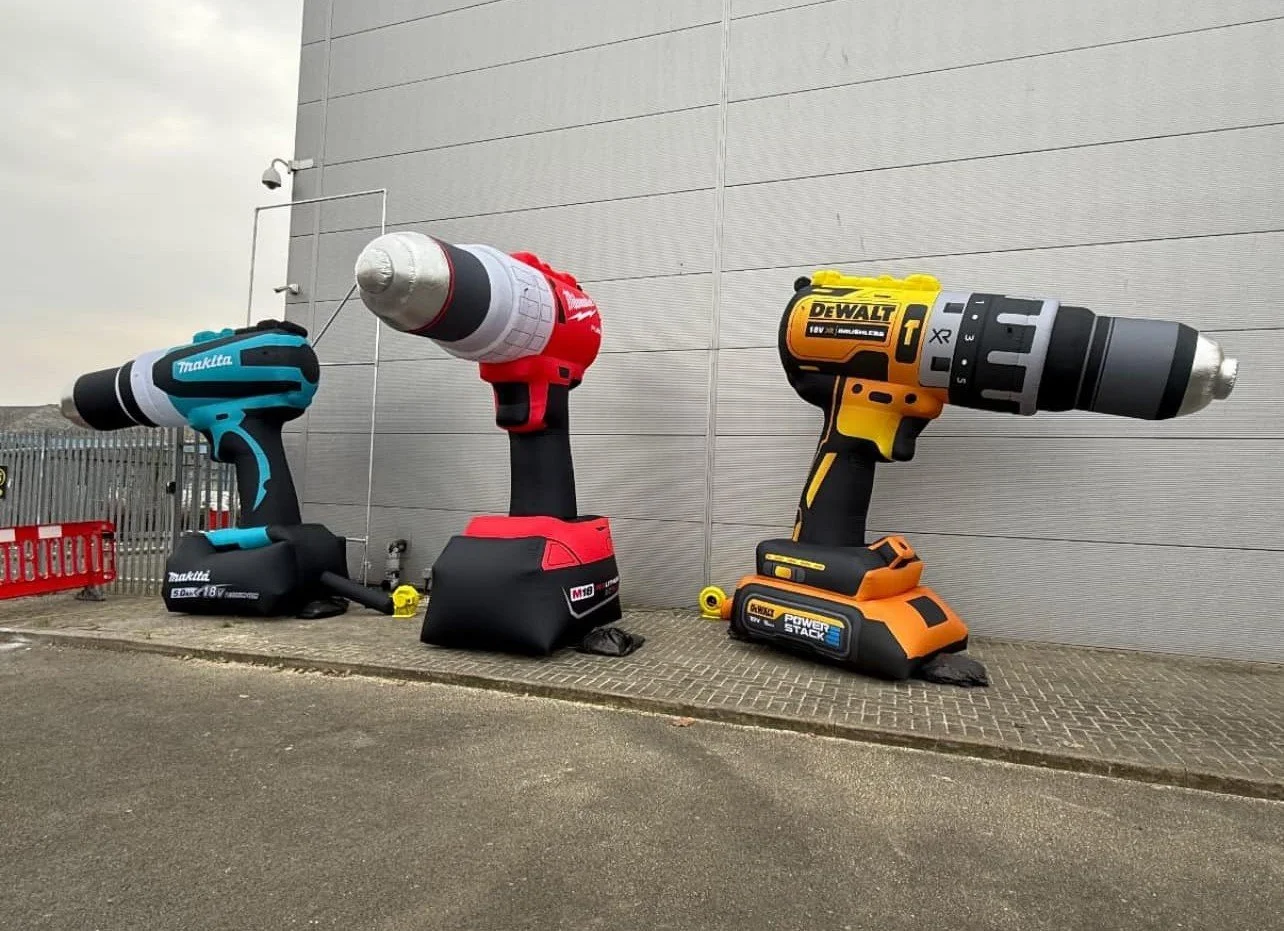
Shareability. A roller banner has never ended up on someone's Instagram. A 10-metre inflatable product replica has, and frequently does. That organic social reach extends the campaign beyond the physical event without additional budget.
A Direct Comparison Across Key Criteria
This isn't a clean "inflatables win everything" comparison, because it wouldn't be honest. Some criteria genuinely favour traditional formats; others clearly don't.
Visibility in a crowded space
Traditional advertising struggles here. In a hall full of 200 exhibitors, a printed banner simply blends in. The visual noise problem is real, and adding more print or bigger graphics rarely solves it; it just adds to the noise. An inflatable, particularly something tall or three-dimensional, creates a landmark that visitors can navigate towards. Exhibition halls are a setting where the ROI case for inflatables is particularly strong: floor space costs money, and brands need every part of their stand to work hard. A branded inflatable above the stand does the job that no banner stand can.
Cost
Traditional advertising has the clear advantage on unit cost. A roller banner might cost £50–£150. An entry-level custom inflatable starts considerably higher. But cost-per-impact is a different calculation. A well-made advertising inflatable can be reused across dozens of events over several years. The per-event cost drops substantially with each use. Traditional display materials, particularly printed fabric and foam boards, often need reprinting when branding changes or materials deteriorate. Custom inflatables designed and built properly are a long-term asset, not a consumable.
Setup and portability
Traditional advertising genuinely wins on speed and simplicity. A roller banner is up in 30 seconds. Most advertising inflatables take longer, though most standard-sized units can be operational within 10 minutes once on site, and larger structures within an hour. For touring campaigns or roadshows with multiple daily setups, this is worth factoring in. Worth noting too: inflatables pack down to a fraction of their displayed size, making transport manageable even for large formats.
Indoor vs outdoor use
Both formats work indoors and outdoors, but with different considerations. Traditional displays work in almost any indoor environment without restriction. Indoor inflatables require checking ceiling height, ventilation, fire safety regulations, and venue-specific rules. Most exhibition halls can accommodate exhibition inflatables with proper planning, but that planning conversation needs to happen early. Outdoors, inflatables gain a significant advantage: they're visible at scale, weather-resistant for most conditions, and suited to the kind of large-footprint environments where flat signage simply disappears.
Earned media potential
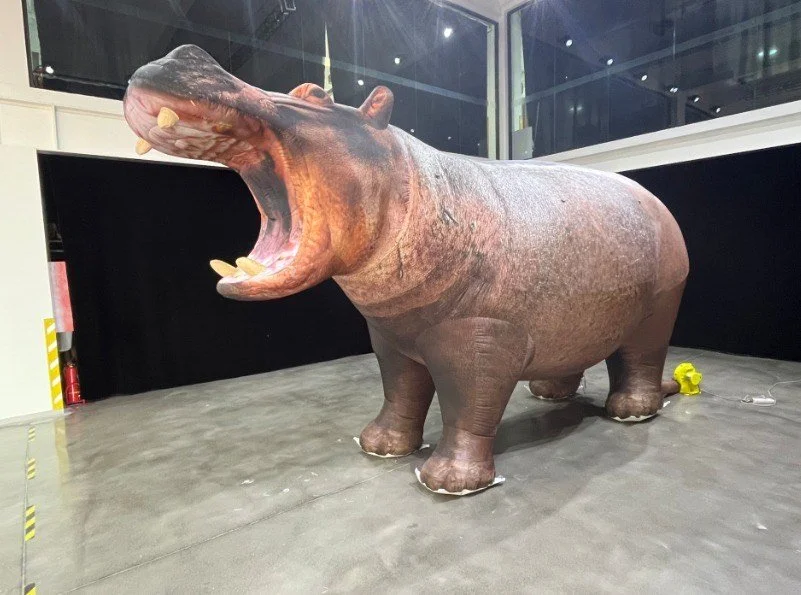
This is where the comparison becomes one-sided. Traditional advertising doesn't generate press coverage. An inflatable can. Nova's work with Nottingham's NHS organ donation team is a real example: a single hot air balloon press launch reached the BBC and most local news channels, generating more coverage than a full year of traditional OOH advertising at considerably greater spend. Similarly, the Co-op Funeralcare elephant-in-the-room campaign used a literal inflatable elephant to make a creative concept land in the press. That kind of earned media is genuinely difficult to achieve through conventional display formats. For more on this approach, Nova's out of home advertising and aerial marketing pages cover the options in more detail.
Brand perception
There's a perception risk worth naming: inflatables done badly can look cheap. A poorly made inflatable with low-resolution printing doesn't communicate quality; it communicates the opposite. The same risk doesn't apply to a well-printed roller banner; mediocre traditional advertising is just... mediocre. Modern inflatables built with full digital printing and high-grade materials look nothing like a bouncy castle. But quality varies considerably across suppliers, and buying on price alone tends to produce exactly the result you were trying to avoid.
What Type of Event Suits Each Format?
The honest answer is that the right format depends on the environment, the audience, and what you need people to do.
Traditional advertising suits:
Small or intimate event spaces where scale would feel out of proportion
Situations where information density matters more than attention capture, such as a conference session backdrop where people are already seated and reading is the goal
Very tight budgets where cost-per-unit is the deciding factor
Scenarios where setup time is genuinely minimal and quick teardown is critical
Inflatable advertising suits:
Trade shows and exhibitions where standing out from hundreds of competitors matters
Outdoor experiential marketing at festivals, sporting events, or retail parks
Grand openings and product launches where footfall generation is the primary objective
Campaigns with a PR or social media component where a visual hook is part of the strategy
Advertising campaigns running across multiple locations where a reusable asset makes financial sense
Many brands use both: traditional formats handling the detail and information layer, inflatable advertising doing the heavy lifting on attention capture and standout. They're not mutually exclusive, and the strongest event setups often combine them deliberately.
The Formats Available Through Nova Inflatables
Nova produces and manages the full range of advertising inflatables, from straightforward options to highly bespoke builds. The main formats include:
Air dancers / balloon men: motion-based attention capture, long-established for retail and event use
Inflatable arches: entrances, race starts/finishes, exhibition framing
Inflatable columns and pillars: height and presence at outdoor events
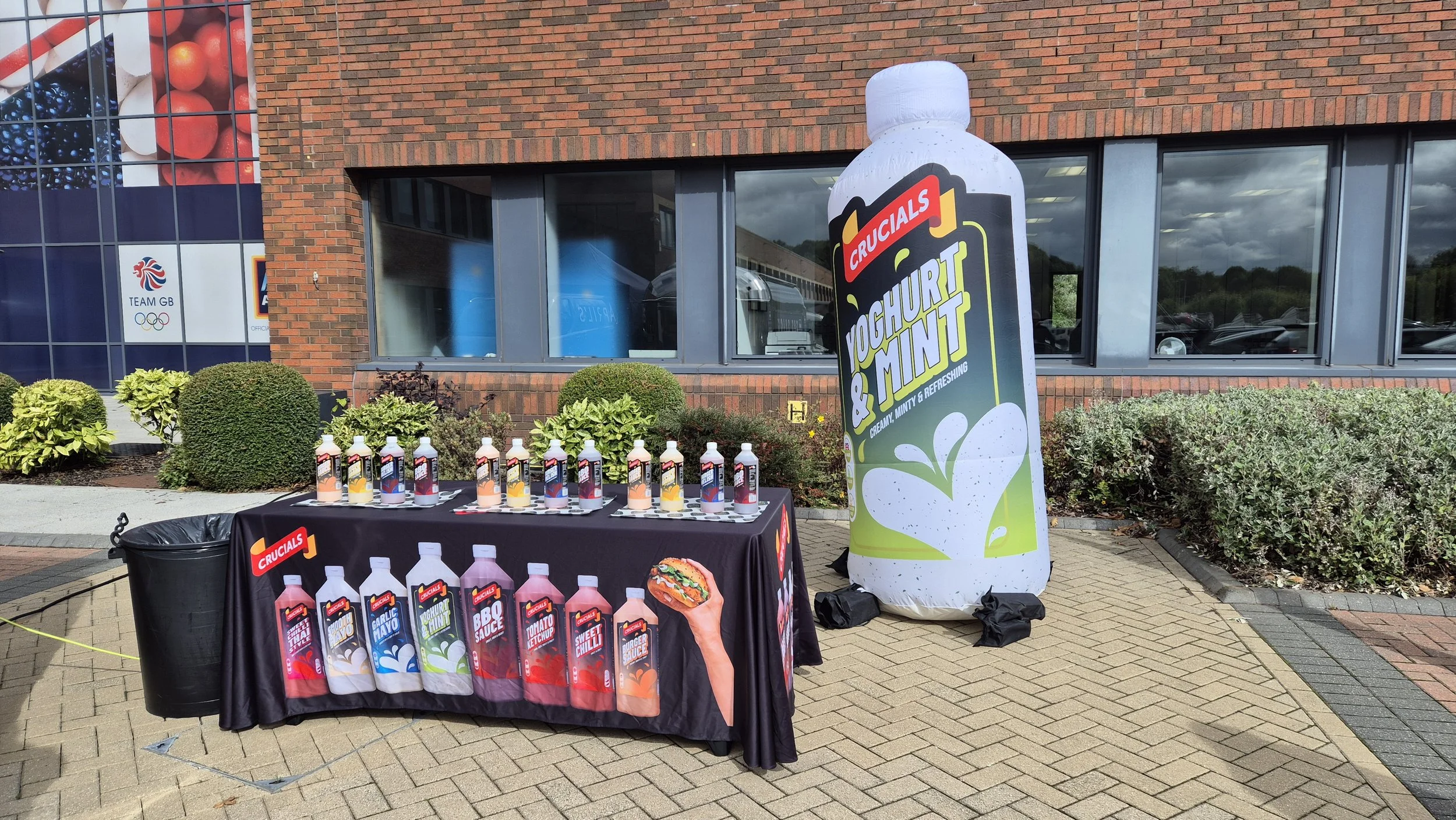
Inflatable product replicas: scale versions of products for launches, trade shows, and PR campaigns
Custom inflatable characters: mascots and brand characters in three dimensions
Inflatable advertising signs: branded messaging formats with greater presence than flat signage
Exhibition inflatables: stand-specific formats designed for trade show environments
Inflatable blimps: aerial presence at outdoor events
Giant inflatables: large-scale builds for maximum impact
Hot air balloon advertising: for campaigns requiring truly unmissable aerial reach
If you're unsure which format fits your brief, Nova's creative marketing process starts with that conversation, and the team will be straightforward about what will actually work for your specific environment and objectives.
FAQS
Thinking About Your Next Event?
Nova Inflatables has worked with brands ranging from the NHS and Netflix to Coca-Cola, Gymshark and Ben & Jerry's. The team offers no-obligation conversations about briefs and ideas, whether you're comparing formats, working out scale, or trying to understand what's possible within a specific budget.
View the full range of advertising inflatables or get in touch with the team to talk through what would work for your campaign.
-
Yes. B2B companies at trade shows and exhibitions have seen strong results, particularly where having something tangible for visitors to gather around helps open conversations about complex products or services. An inflatable advertising sign or branded structure gets people to your stand; your team and your materials do the explaining from there.
-
A well-made inflatable used repeatedly across many events has a different environmental profile than single-use printed materials that go to landfill after one show. Nova has an active environmental policy and recycling programme, worth reading if sustainability is a factor in your decision.
-
Not necessarily. There are stock options and entry-level formats that work for smaller budgets, and the per-event cost calculation over the lifespan of a quality inflatable often compares favourably to repeatedly reprinting traditional display materials. The stock inflatables for sale page is a useful starting point if budget is a primary consideration.
-
Custom builds typically run 4–8 weeks from approved design to delivery. If a campaign date is fixed, working backwards from that deadline and factoring in design approval time is the right approach. Three months' notice is comfortable; six weeks is workable.